
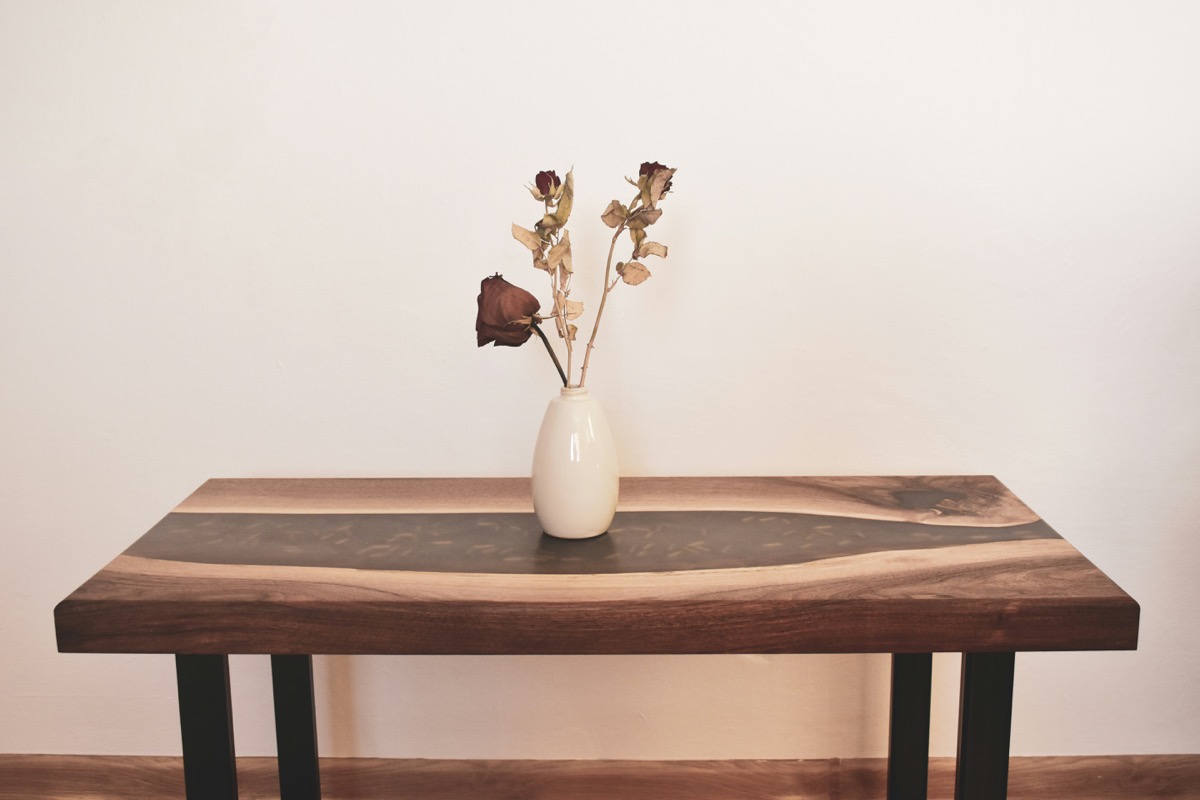
When investing in a beautiful wooden table or furniture piece, you want it to last. But here's a question many customers ask us at Resin Art Factory: "What's protecting my table—and will it hold up to real life?" The finish on your furniture isn't just about shine; it's your first line of defense against scratches, heat, spills, and the wear of everyday living.
At our workshop in Constanța, we've worked with both traditional varnish and modern epoxy resin finishes. While varnish has been around for centuries, we exclusively use epoxy resin for our furniture pieces. Why? Because when it comes to durability, heat resistance, and long-term beauty, epoxy resin outperforms varnish in nearly every category. Let's explore the key differences and what they mean for your furniture.
Understanding Hardness: The Scratch Test
Think about your dining table. Keys get tossed on it. Laptops slide across the surface. Maybe your kids do homework there, pressing down hard with pencils. Every day, your furniture faces potential scratches.
Traditional varnish creates a protective layer, but it's relatively soft compared to modern alternatives. On the hardness scale used for coatings, varnish typically rates between 2H and 4H. In real-world terms? A sharp object, a dragged plate, or even regular use can leave visible scratches within months. You might notice fine lines appearing where dishes are set down repeatedly, or wear patterns developing in high-use areas.
Epoxy resin, on the other hand, cures into an incredibly hard surface—often rating 6H to 7H on the same scale. This isn't just a number. It means your table can handle the daily chaos of family life without showing battle scars. We've seen epoxy-finished tables used in busy restaurant environments for years, still looking glossy and scratch-free. The molecular structure of cured epoxy creates a dense, rigid surface that resists abrasion far better than varnish.
For furniture owners, this translates to peace of mind. You don't need to use placemats for every meal or worry about normal use damaging your investment.
Heat Resistance Matters
Picture this: someone sets down a hot pizza box directly on your table. Or a ceramic dish fresh from the oven. Maybe your table sits near a window where afternoon sunlight beats down for hours. How does your finish hold up?
Varnish has significant limitations when it comes to heat. Most traditional varnishes begin to soften at temperatures around 120-150°F (50-65°C). A hot plate or mug can leave white rings or cloudy marks—damage that's often permanent. Direct sunlight can also break down varnish over time, causing it to become brittle or develop a cloudy appearance. We've seen beautiful antique tables with varnish finishes that have been ruined by a single hot dish.
Epoxy resin stands strong against heat. Quality epoxy formulations can withstand temperatures up to 300°F (150°C) without softening or marking. In practical terms, this means your morning coffee mug won't leave a ring. That casserole dish you place on the table while serving dinner won't damage the finish. Even prolonged sun exposure won't degrade properly applied epoxy resin.
At Resin Art Factory, we use high-grade epoxy specifically formulated for furniture. We've tested our tables with hot cookware, and the results speak for themselves: no marks, no damage, no worries.
Longevity Over Years: The Maintenance Question
Every furniture finish will need care over its lifetime, but the frequency and intensity vary dramatically.
Traditional varnish requires regular maintenance. Depending on use, most varnished furniture needs recoating every 2-4 years. The process isn't simple: you'll need to lightly sand the surface, clean thoroughly, and apply new layers of varnish. Miss this maintenance window, and the varnish can begin to crack, peel, or wear through to the bare wood. Many of our customers have come to us with varnished pieces that looked tired and worn after just a few years of family use.
Epoxy resin is nearly maintenance-free. Once properly applied and cured, epoxy forms a permanent bond with the wood. It won't peel, crack, or separate. A simple wipe-down with a damp cloth is usually all you need. We have customers with epoxy resin tables that look as stunning after five years as they did on day one—no refinishing required.
The initial application matters, too. Varnish is typically applied in thin layers, often requiring 3-5 coats with drying time between each. Epoxy can be poured in a thick, self-leveling layer that cures into a flawless finish. This not only saves time during creation but results in a more uniform, durable surface.
The Aesthetic Factor: Clarity and Beauty
Durability is crucial, but let's talk about beauty. After all, you're choosing furniture that will define your space.
Varnish yellows over time. This is one of the most common complaints we hear. Varnish—especially oil-based varieties—develops a yellow or amber tint as it ages, particularly when exposed to UV light. While some people appreciate this antique look, it can muddy the natural color of the wood and any artistic elements in the piece.
Epoxy resin maintains crystal clarity for years. High-quality epoxy formulations include UV stabilizers that prevent yellowing and clouding. This is especially important for our river tables and pieces with embedded elements—the clarity of epoxy lets the artistic details shine through. The wood grain remains vivid and true to its natural color, and any decorative elements (stones, shells, metallic pigments) stay vibrant.
There's also the depth factor. Epoxy creates a thick, glass-like surface with incredible depth and dimension. Light interacts with the finish in a way that makes the wood appear richer and more three-dimensional. Varnish, applied in thin layers, simply can't achieve this same visual effect.
Real-World Benefits: Where Epoxy Shines
Let's bring this into your life. Here's what epoxy resin durability means for different furniture owners:
Family dining tables: Kids' homework, craft projects, family dinners—your table takes it all. Epoxy handles spills without staining, resists scratches from daily use, and won't mark when someone forgets to use a coaster.
Restaurant and commercial spaces: Business owners need furniture that looks professional year after year. Our epoxy tables in restaurants handle constant use, hot plates, and cleaning without showing wear.
Outdoor and semi-outdoor furniture: Covered patios and sunrooms expose furniture to temperature swings and UV light. Epoxy's heat resistance and UV stability make it ideal for these challenging environments.
Artistic and river tables: For furniture pieces that are works of art, epoxy does double duty—protecting the piece while enhancing its visual impact with that signature glass-like clarity.
Why Resin Art Factory Chooses Epoxy
At our workshop, we could use varnish. It's cheaper, faster to apply, and familiar. But we don't—because our commitment is to create furniture that becomes a lasting part of your life.
When you commission a custom table from Resin Art Factory, you're investing in more than beautiful wood and craftsmanship. You're investing in years of worry-free use. We choose epoxy resin because it aligns with our values: durability, quality, and furniture that gets better with time, not worse.
We've seen too many beautiful pieces diminished by inadequate finishes. We've refinished tables that could have been saved with the right protection from the start. That's why every piece that leaves our workshop in Constanța is finished with premium epoxy resin—because your furniture deserves protection that matches its beauty.
Conclusion: Protection That Performs
The choice between epoxy resin and traditional varnish isn't really a choice at all—it's a decision about how long you want your furniture to look its best. Epoxy offers superior hardness, exceptional heat resistance, minimal maintenance, and lasting clarity. For furniture you'll use daily and treasure for years, epoxy resin is the clear winner.
Whether you're considering a custom river table, a dining set, or restoration of a beloved piece, the finish matters as much as the craftsmanship beneath it.
Ready to invest in furniture built to last? Explore our gallery of epoxy resin tables and discover how we combine traditional woodworking with modern protection. Contact our team at Resin Art Factory to discuss your custom furniture project—let's create something beautiful that's built for real life.