
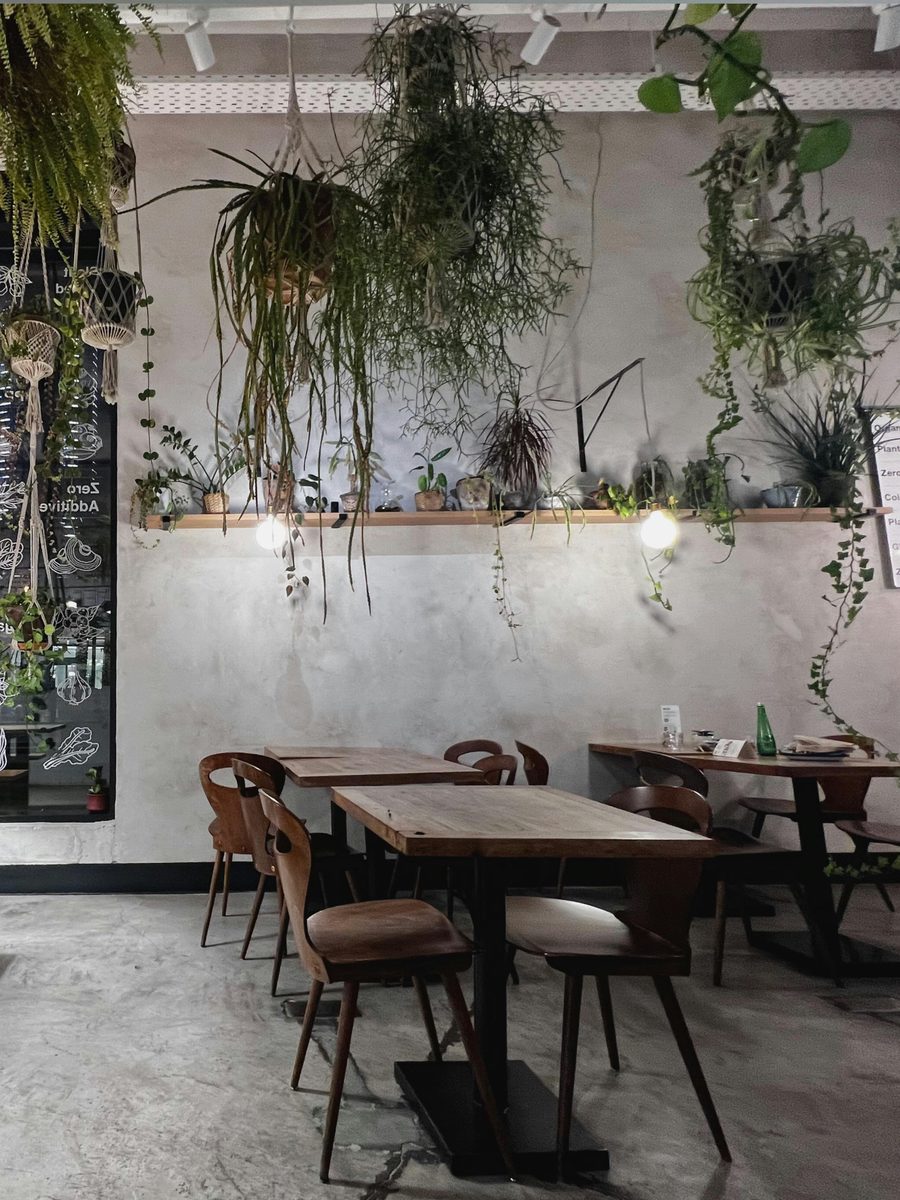
There is a moment, upon stepping into a truly well-designed restaurant, when you feel the space before you understand it. The light is warm, the air carries a faint trace of cedar and stone, and somewhere between your first glance at the tables and the cool mineral touch of the wall beside you, you decide: you want to stay. That sensation — effortless, almost mysterious — is rarely accidental. More often than not, it is the work of two materials working in quiet harmony: microcement and resin-poured wood.
These two surfaces, so different in character, have become the defining language of the modern warm restaurant. One whispers of ancient quarries, of Roman concrete and Zen minimalism. The other glows like amber, alive with the grain of a century-old tree. Together, they create what no single material can achieve alone: a space that is simultaneously refined and intimate, architectural and organic, cool to the eye yet warm to the touch.
The Visual Balance: Letting the Wood Speak
The genius of pairing microcement with resin wood lies in the art of contrast. Microcement — applied seamlessly across floors, walls, or kitchen counters — presents itself in matte, neutral tones: warm limestone, cool slate grey, soft putty, or pale bone. It doesn't compete. It recedes gracefully, becoming the architectural canvas upon which everything else is painted.
Against this restrained backdrop, a live-edge walnut table poured with deep-blue epoxy resin becomes a visual event. The high-gloss surface of the resin catches light and throws it back — shifting from sapphire to turquoise to midnight blue as you move around the table. The wood grain, with its knots and imperfections, reads like a topographic map of something ancient. In a room of microcement, these tables don't just furnish the space. They anchor it.
The key is restraint on the architectural side. The more muted and seamless the microcement, the more loudly the resin wood can sing.
The Tactile Experience: The Language of Touch
A restaurant is not a gallery. Guests do not observe it — they inhabit it. And inhabiting a space means touching it. Hands rest on tabletops, fingers trace the natural edge of a live-edge slab, palms press against a cool mineral wall on the way to a corner booth.
This is where the pairing of microcement and resin wood reaches its most sophisticated dimension: the tactile. Microcement walls and floors offer a surface that is cool and faintly textured — like the inside of a stone house in summer. It grounds the guest, communicating solidity and permanence without weight or oppression.
The resin table offers the opposite: it is smooth, almost liquid in its polish, yet warm beneath the fingers in a way that stone never is. Beneath the resin, the natural wood grain rises slightly to the touch, a reminder that this surface was once alive. This interplay — cool architecture, warm table — creates a kind of sensory conversation that guests feel subconsciously, even if they never articulate it. It is, ultimately, why they linger.
Lighting and Reflection: The Amber Hour
No material exists independently of light, and the microcement-resin pairing is particularly sensitive to the quality of illumination around it. Get it right, and the effect is transformative.
Resin surfaces behave like still water under light. Pendant lamps positioned above a river table will cast amber pools across the gloss, picking up the warmth of Edison filaments and throwing it across the grain of the wood beneath. As guests shift and move, the reflections animate — subtle, hypnotic, alive. In a restaurant context, this is priceless: it gives each table its own small atmosphere, its own intimate glow, even within a larger room.
Microcement, by contrast, absorbs light. Its matte surface scatters rather than reflects, eliminating the harsh glares and hotspots that plagued older tiled or lacquered surfaces. The result is a room where the light feels even and diffuse — where the drama lives at the tables, not in blinding reflections off the walls. Warm-toned LED spotlights (2700K–3000K) are ideal, and directional tracks allow the light to be sculpted precisely onto the surfaces that deserve it most.
Durability for Hospitality: The Practical Case
Beauty alone does not survive a busy Saturday night in a full restaurant. These materials earn their place not only as aesthetic choices but as practical ones.
Microcement, properly sealed with polyurethane lacquer, is resistant to water, staining, heat, and the relentless foot traffic of a commercial environment. Unlike grout lines in traditional tile, it offers no crevices for bacteria or grease to accumulate — a significant advantage in spaces where hygiene standards are non-negotiable. Maintenance is straightforward: a neutral-pH cleaner, a damp cloth, and the surface looks exactly as it did on opening night.
Resin-poured wood tables, when made with professional-grade, UV-stable epoxy, resist scratching, heat from warm plates, and the daily assault of cutlery better than conventional wood finishes. The resin encases the wood in a protective shell while preserving its character. Over years of service, a well-made river table develops the patina of something genuinely lived-in — more beautiful, not less.
Atmospheric Tips: Bridging the Two Worlds
For designers and restaurant owners working with this pairing, the accent materials you choose will either elevate or undermine the composition.
Brass and bronze fixtures are the most reliable bridge between the two surfaces. Their warm metallic tone picks up the amber in the resin and the gold undertones often present in limestone-hued microcement. A brass wall-mounted tap in the bathroom, or pendant lights with aged bronze fittings above the tables, create a coherent thread through the entire space.
Sage green and dusty olive accents — in upholstered chairs, potted plants, or a statement wall — bring in the organic palette of the forest without competing with the wood's own warmth. The green reads as a natural extension of the living material already present in the table surface.
Natural textiles — rattan lampshades, linen napkins, woven seat cushions — add a softness that neither microcement nor resin inherently possesses. They humanize the composition, introducing imperfection and texture at the human scale.
Avoid cold whites, polished chrome, and highly reflective surfaces. They work against the warmth you are building and fragment the visual calm that microcement provides.
A Space Worth Returning To
The modern warm restaurant is not defined by any single trend or material. It is defined by the feeling it creates — and that feeling is built from thousands of small decisions, many of them invisible to the conscious guest. The seamless grey floor that makes the room feel larger. The table that seems to glow from within. The wall you lean against that feels, impossibly, like the coolest, most reassuring thing in the room.
Microcement and resin wood don't just furnish a restaurant. They give it a soul — a quiet, textured, amber-lit soul that guests will return to, season after season, without quite being able to explain why.
Ready to Design Your Space?
Whether you're designing a restaurant, a home, or a commercial space, our team in Constanța can guide you through every material decision — from microcement finishes to bespoke resin tables.