

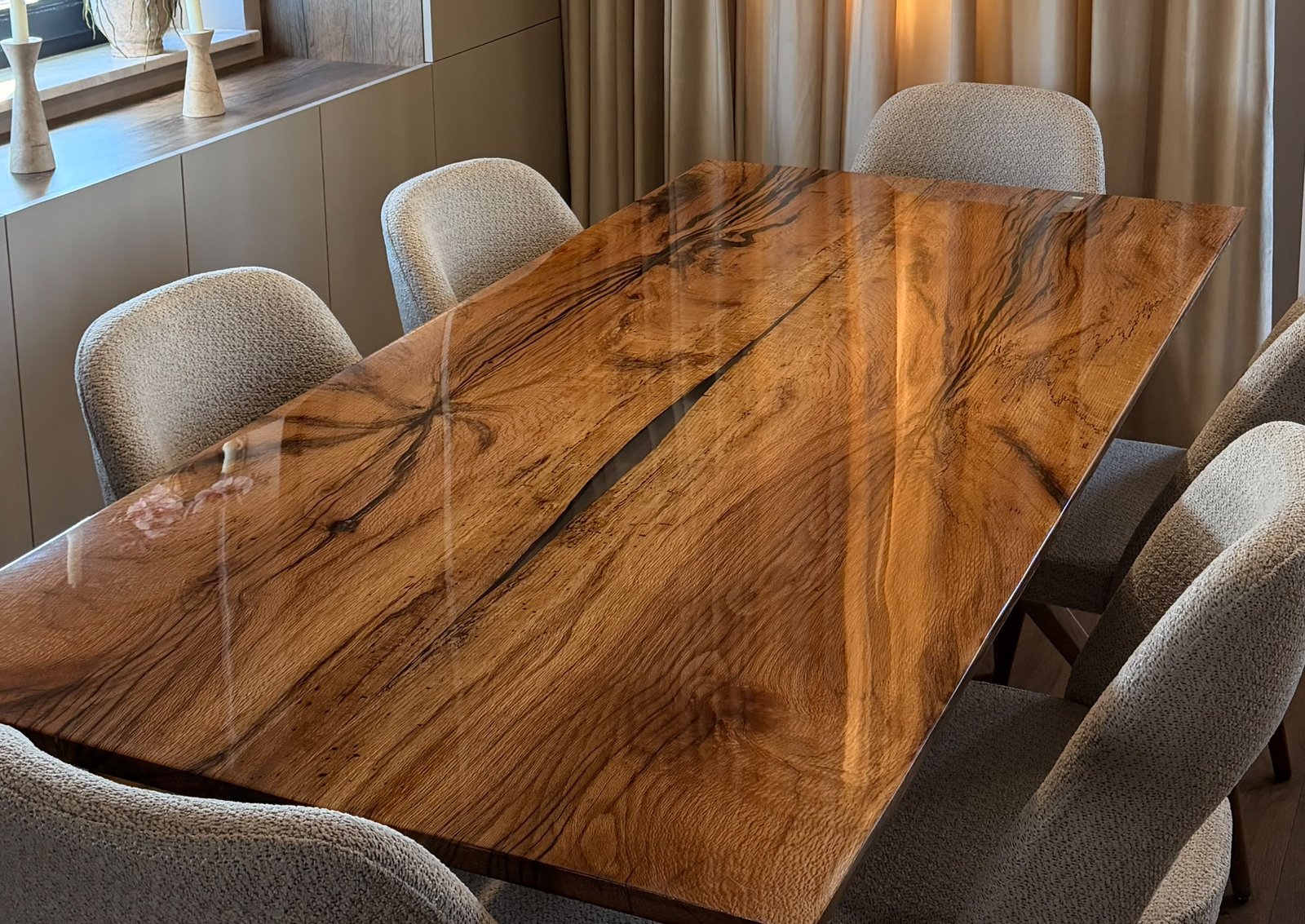
Most people picture a resin table as a bold river of colour running between two slabs of wood. We love those pieces — but sometimes the most striking thing you can do with resin is use less of it. This dining table is exactly that kind of project: a solid oak dining table with resin used not as the star of the show, but as a quiet supporting role that lets the wood tell its own story.
A Crack Is Character, Not a Defect
Every slab of oak carries the history of the tree it came from. As the wood dries over months and years, it moves, checks and sometimes splits — and this slab arrived with a long natural crack running almost its full length. In mass-produced furniture, that crack would have been cut away and the board discarded. For us, it was the most interesting line on the table.
Instead of hiding it, we stabilised the crack with resin. A slim line of smoky, translucent resin now fills the split from end to end, locking the two sides of the slab together and preventing the crack from travelling any further. What could have been a weakness became a structural seam — and a design detail that draws the eye straight down the centre of the table.
Grain That Comes Alive Under Glass
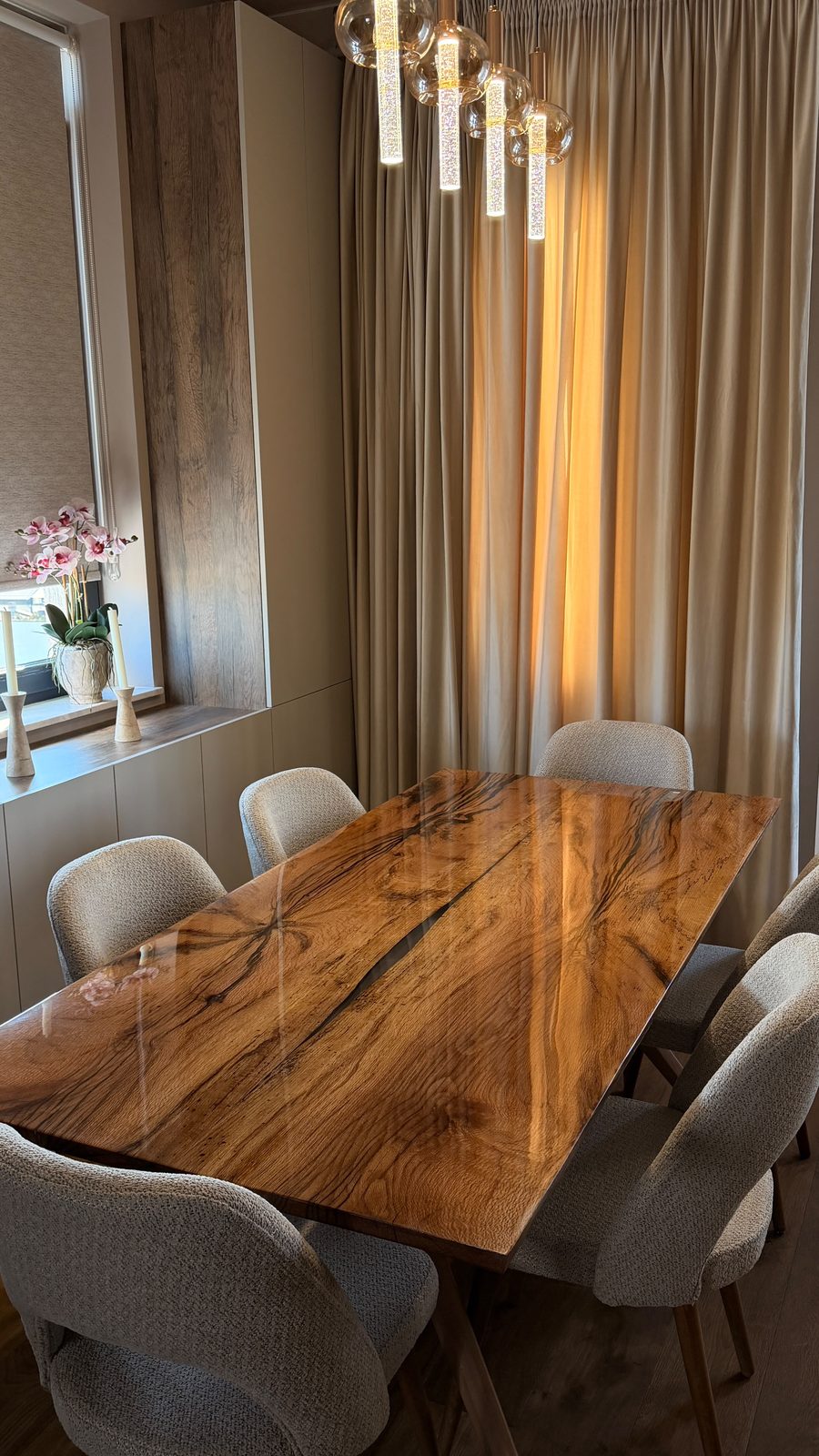
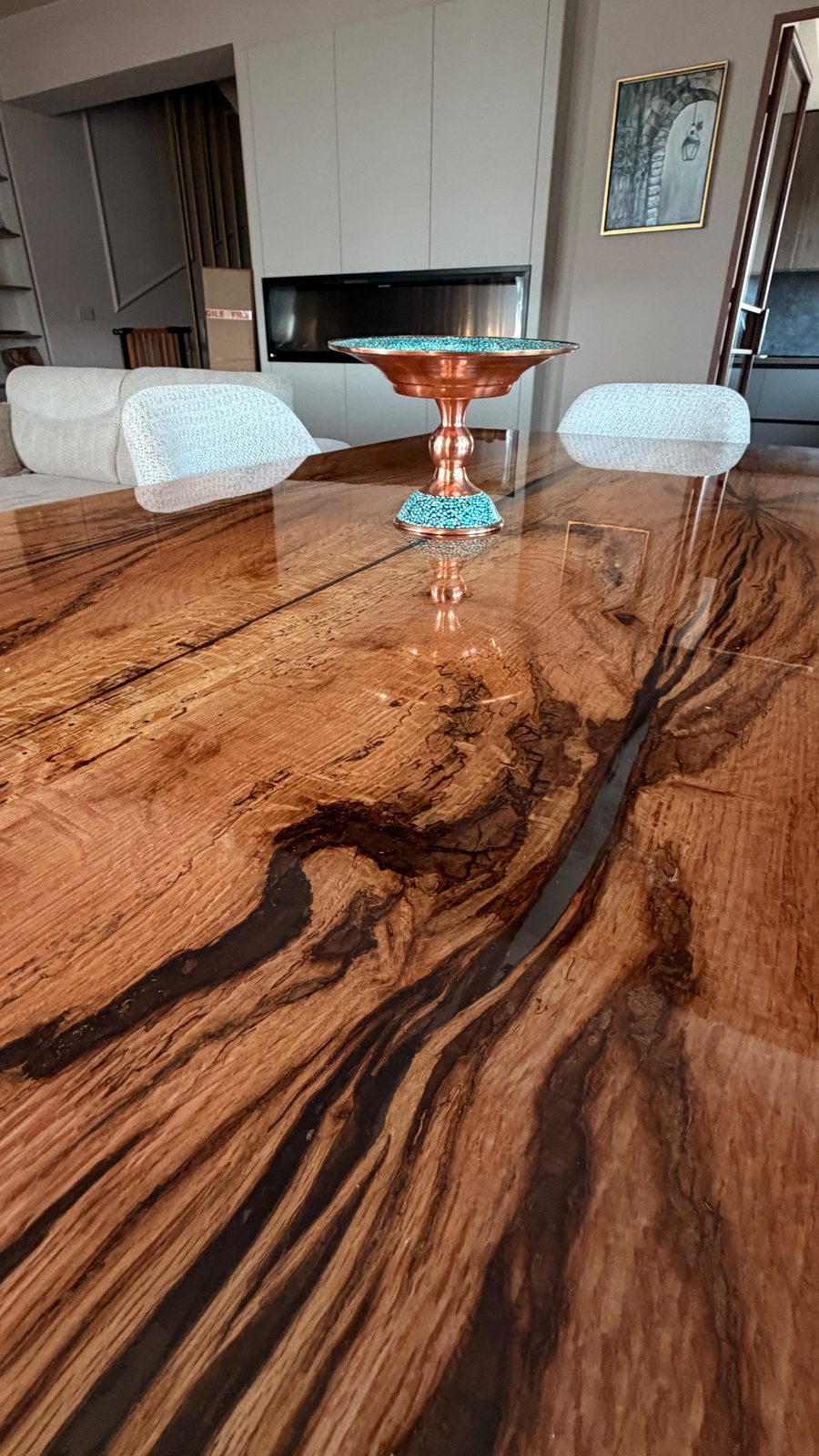
This particular piece of oak is anything but plain. Dark mineral streaks sweep across the surface in waves, knots burst outward like small stars, and the medullary rays — the shimmering flecks typical of quarter-sawn oak — catch the light at every angle. Sanded and oiled, it would already be beautiful. Sealed under a crystal-clear, high-gloss epoxy coat, it becomes almost three-dimensional.
The epoxy works like a lens. It deepens the contrast between the honey-gold wood and the dark streaks, gives the whole top a glass-like depth, and reflects the room around it — the pendant lights, the curtains, the morning sun through the window. The table looks different at breakfast than it does at dinner, and that is exactly the point.
Subtle Resin or River Table: Which Is Right for You?
Both styles have their place, and the right choice depends on the room and the person living in it. A minimal resin inlay like this one tends to work best when:
- The wood is the headline. If the slab has dramatic figure, streaks or burls, a small amount of resin lets that character lead.
- The interior is warm and calm. Beige, taupe, linen and natural textures pair beautifully with honey-toned oak and a discreet resin line.
- You want timeless over trendy. A natural-crack table reads as a solid wood piece first — it will sit comfortably in your home for decades, whatever the design fashions do.
- The dining room is compact. Without a wide coloured river, the table feels lighter and less dominant in a smaller space.
A river table, on the other hand, is the right answer when you want the table to be the unmistakable centrepiece of the room — bold colour, depth and movement in the resin itself. If you are curious about that side of our work, take a look at our chameleon river table.
Designing the Room Around the Table
A table like this does a lot of work in an interior, so it deserves a room that supports it. In this home, a few choices make it shine:
Clean Lines, Organic Surface
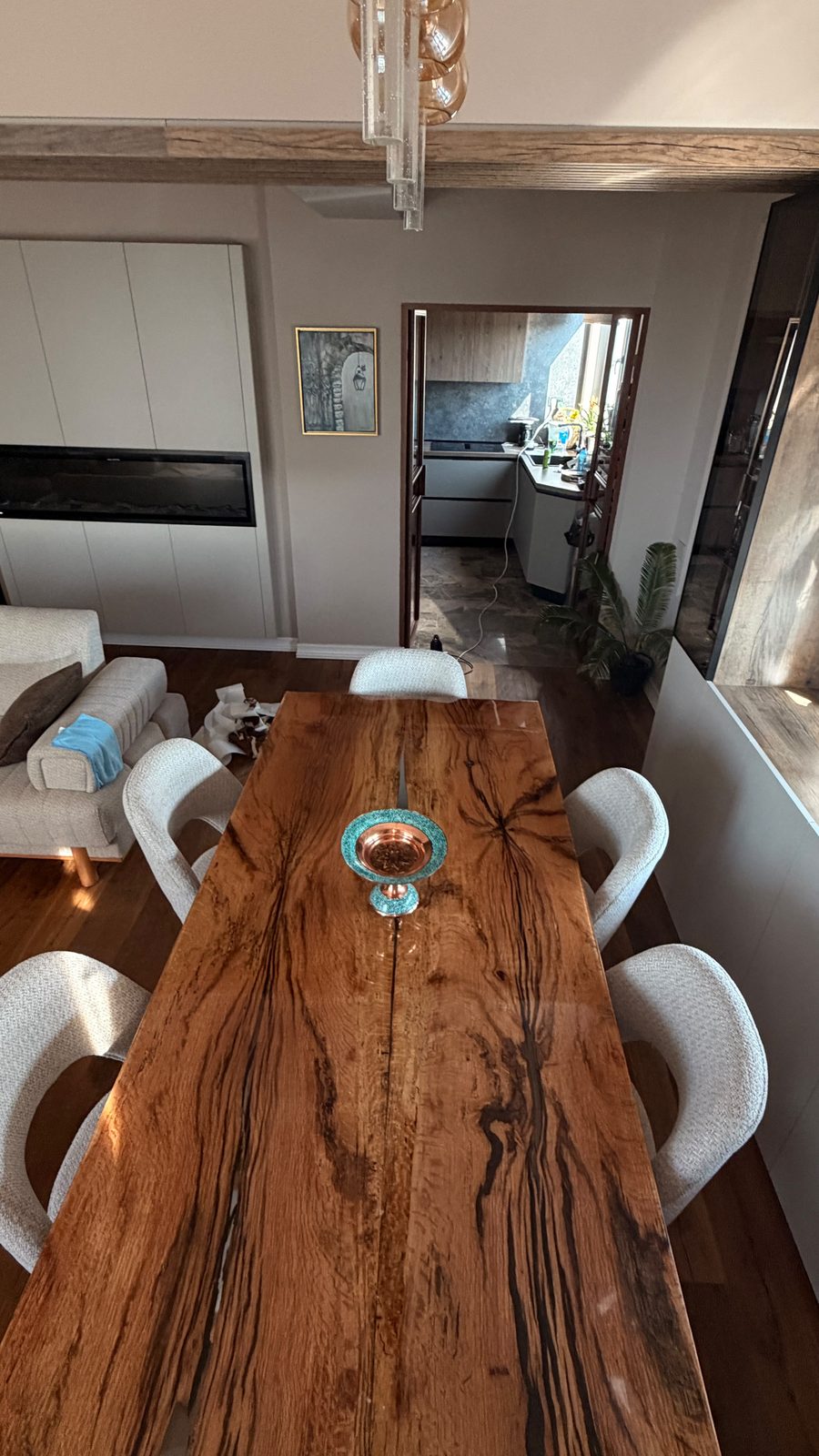
The slab was finished with straight, squared edges rather than a live edge. That crisp rectangle frames the wild grain and makes the table feel contemporary rather than rustic.
Soft Textures
Six rounded bouclé chairs soften the high-gloss surface. The contrast between tactile fabric and glass-smooth epoxy is one of the easiest ways to make a resin table feel inviting instead of cold.
Warm, Layered Light
Glass pendant lights hung low over the table create pools of warm light that bounce off the epoxy and pick out every streak in the oak. When choosing lighting for a glossy table, go for warm white (around 2700–3000K) — it flatters wood tones far more than cool light.
Built for Everyday Family Life
A dining table has to survive real life: morning coffee, homework, wine glasses and long family dinners. The full epoxy top coat is what makes this table practical as well as beautiful. It forms a hard, sealed surface that resists spills and moisture, is easy to wipe clean, and protects the oak from stains that would soak into oiled or waxed wood. If you are weighing up finishes, we have compared the options in detail in Epoxy Resin vs. Varnish.
Care is simple: wipe with a soft, damp cloth and mild soap, use coasters and trivets for very hot dishes, and avoid abrasive cleaners. Treated this way, the finish keeps its depth and shine for years.
Let the Wood Speak
Not every piece of furniture needs to shout. Sometimes the most luxurious result comes from restraint — choosing a remarkable slab of oak, respecting its natural flaws, and using resin only where it truly adds strength and beauty. If you would like a custom dining table with that same quiet presence, browse our gallery, explore our work, or get in touch and tell us about your space.